How to check whether ChatGPT, Perplexity, Gemini and Grok cite your website
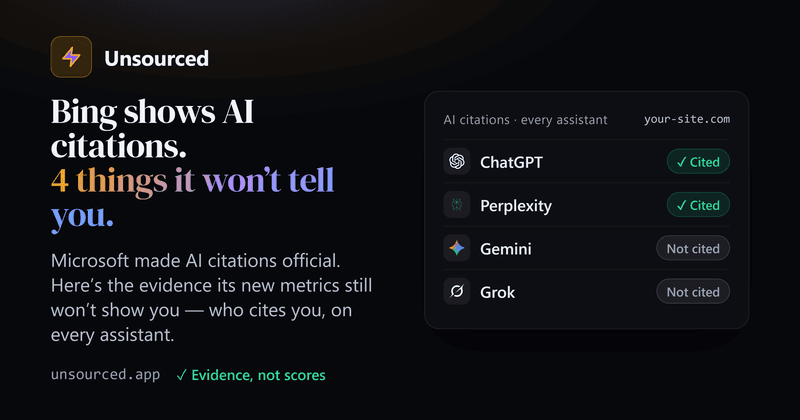
AI answers cite sources now — but not the same ones, and not the sites you'd expect from Google. Here's how to find out where you actually stand, per engine.
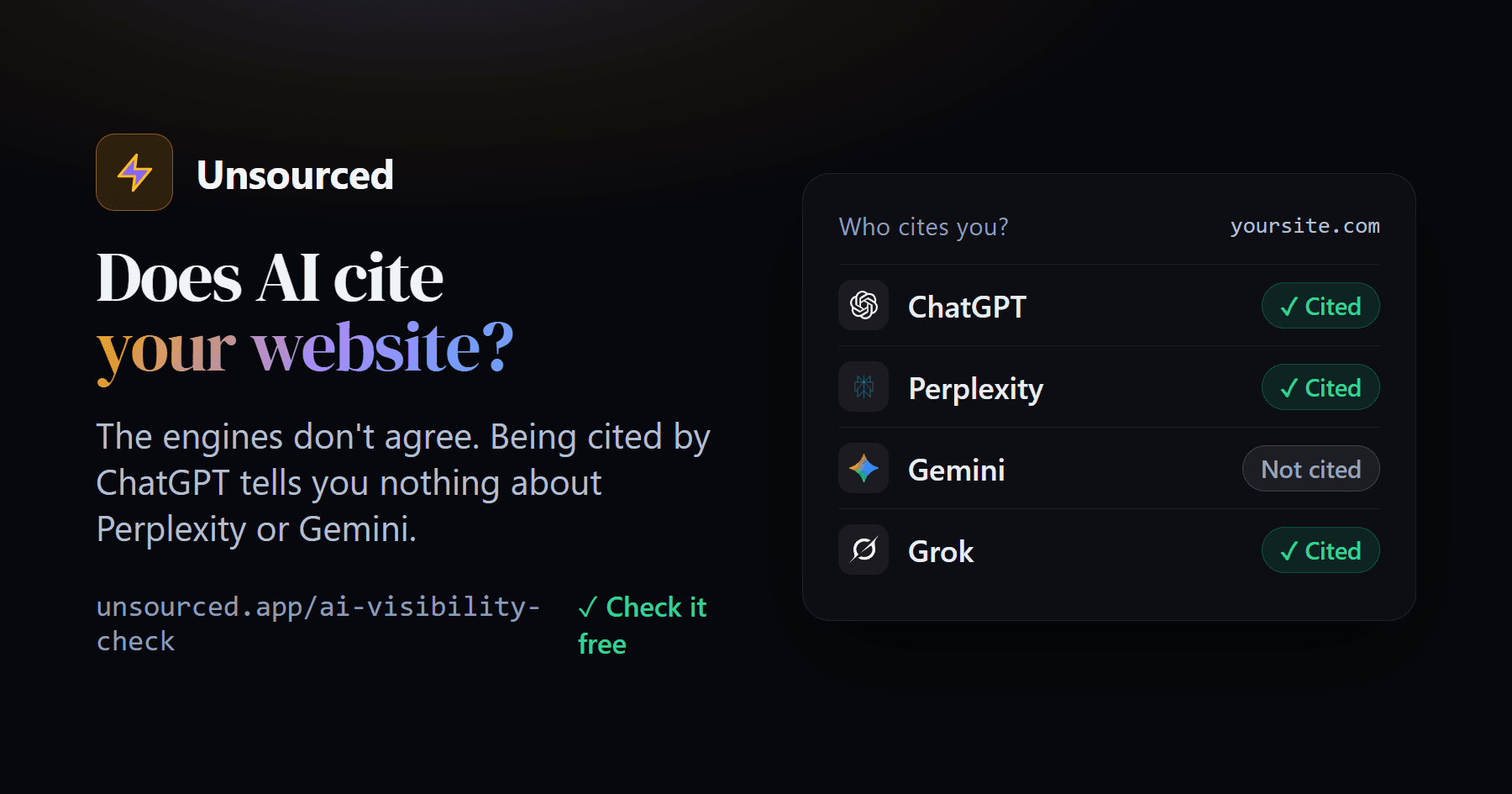
When someone asks ChatGPT or Perplexity for "the best [what you do]," does your site come up? Most people genuinely don't know — and the ways they try to find out are either guesswork or wrong. Here's how to check properly.
First, why your Google ranking won't tell you
The instinct is to assume that if you rank well on Google, AI assistants must be citing you too. They're not the same thing, and treating them as one is the most common mistake we see.
Google ranking measures where your page sits in a list of blue links. AI citation measures whether a model names your site inside a written answer — a completely separate selection made by a different system, often drawing on different signals, and increasingly on the model's own live search rather than the classic index.
How different? We put the same question to seven leading assistants and compared their sources. On a typical query, they agreed with each other only about 16% of the time. There is no single "AI" to rank in. Being cited by ChatGPT tells you almost nothing about whether Perplexity or Gemini will cite you. So "check if AI cites me" is really "check, per engine, whether each one cites me for the questions my audience actually asks."
The wrong ways to check (and why they mislead)
Asking ChatGPT "do you know [my brand]?" A model will often say yes to almost any brand name — that's recall, not citation. It tells you nothing about whether it recommends you unprompted when someone asks about your topic.
Typing your brand name into an AI search. Of course it finds you when you name yourself. The real test is the question a stranger asks — "best CRM for freelancers," not "tell me about [your brand]."
Checking once. AI answers vary by phrasing, by engine, and over time. A single lucky (or unlucky) result isn't a signal.
The right way to check
The honest version of this test has three properties:
Ask the questions your audience asks — unbranded, topic-level questions a real prospect would type, not your own name.
Ask more than one engine — because they disagree, you need ChatGPT and Perplexity and Gemini and Grok, not one stand-in for "AI."
Look at who gets named instead of you — the competitor a model recommends in your place is the single most useful thing on the page. It tells you what "good enough to cite" looks like for that topic.
Do it for free in about a minute
We built a free tool that does exactly this: the AI Visibility Check. Enter your domain and it asks five AI models real, unbranded questions about your topics, then shows you:
whether each model named your site — or recommended someone else;
which competitors got cited in your place;
how many different sites the models named across the questions — the volatility that a single "visibility score" quietly hides.
No login, no card. It's a snapshot, deliberately — enough to tell you whether you have a problem worth looking into.
How to read the result
You're named by some engines, not others. Normal, and expected — remember the 16% agreement. Note which engines miss you; that's your gap list.
The same competitor keeps appearing. Go read the page the models are citing. What question does it answer cleanly that yours doesn't? That's your content brief.
Lots of different sites, no clear pattern. High volatility means the topic is still "up for grabs" in AI answers — the long tail is winnable, and being consistently citable is how you win it.
From snapshot to evidence
A one-off check tells you whether there's a gap. Closing it is a loop, and the loop is the actual work:
monitor citations across engines on a schedule, not once, so you see trends rather than noise;
confirm the AI crawlers fetching your pages are genuine, not spoofed impostors (every AI answer starts with a real crawler hitting your site);
and when you change a page, re-run the exact question to see whether the citation actually moved — evidence, not a hunch.
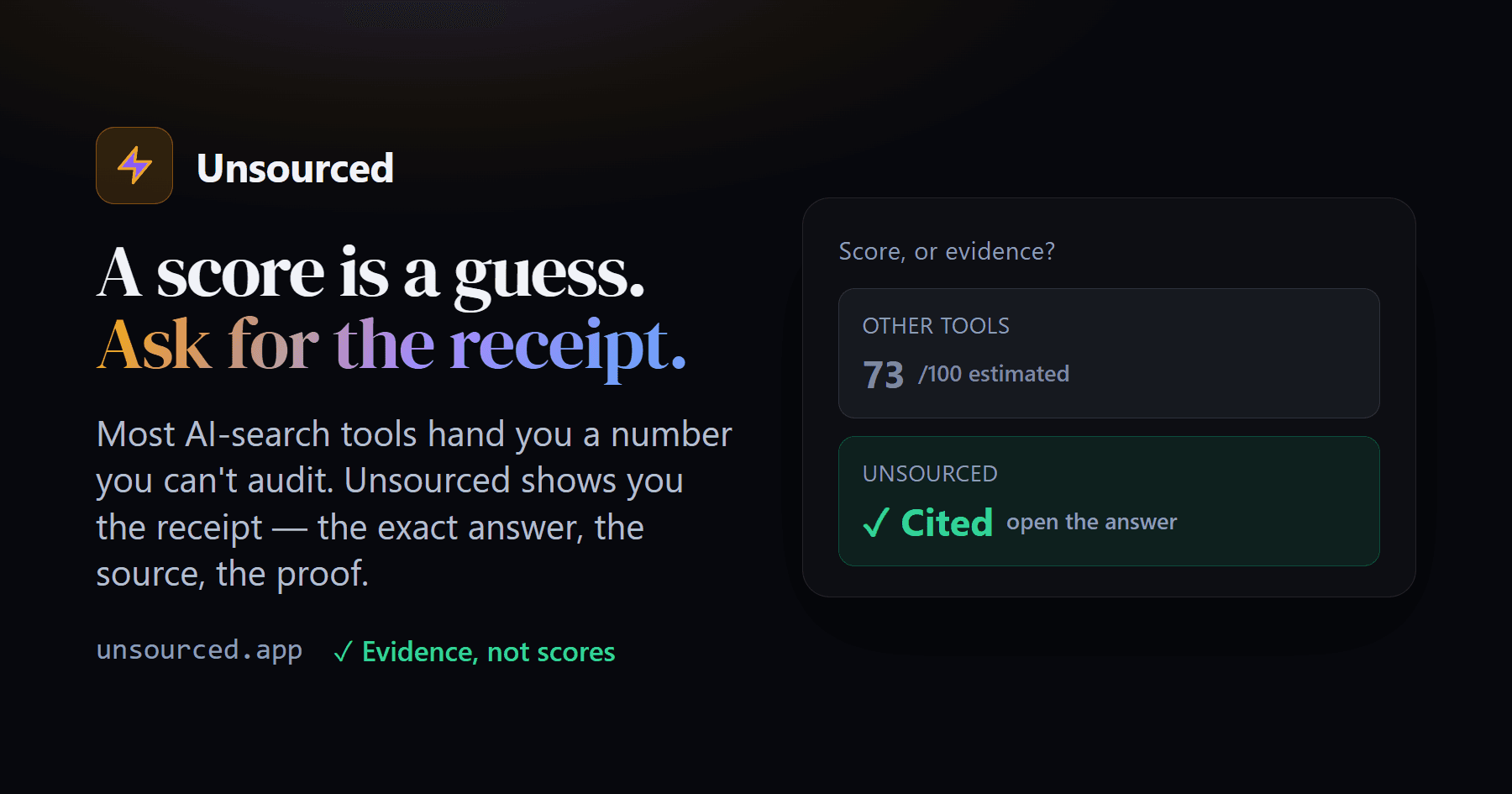
That's the difference between a score you can't audit and a receipt you can. The free check is the snapshot; if you want the schedule, the per-engine history and the verified-crawler picture, that's what Unsourced does — you can see it on the live demo before you sign up for anything.
Start here: run the free AI Visibility Check and find out where you actually stand.