
Stop Optimising for the Machine That's Eating You
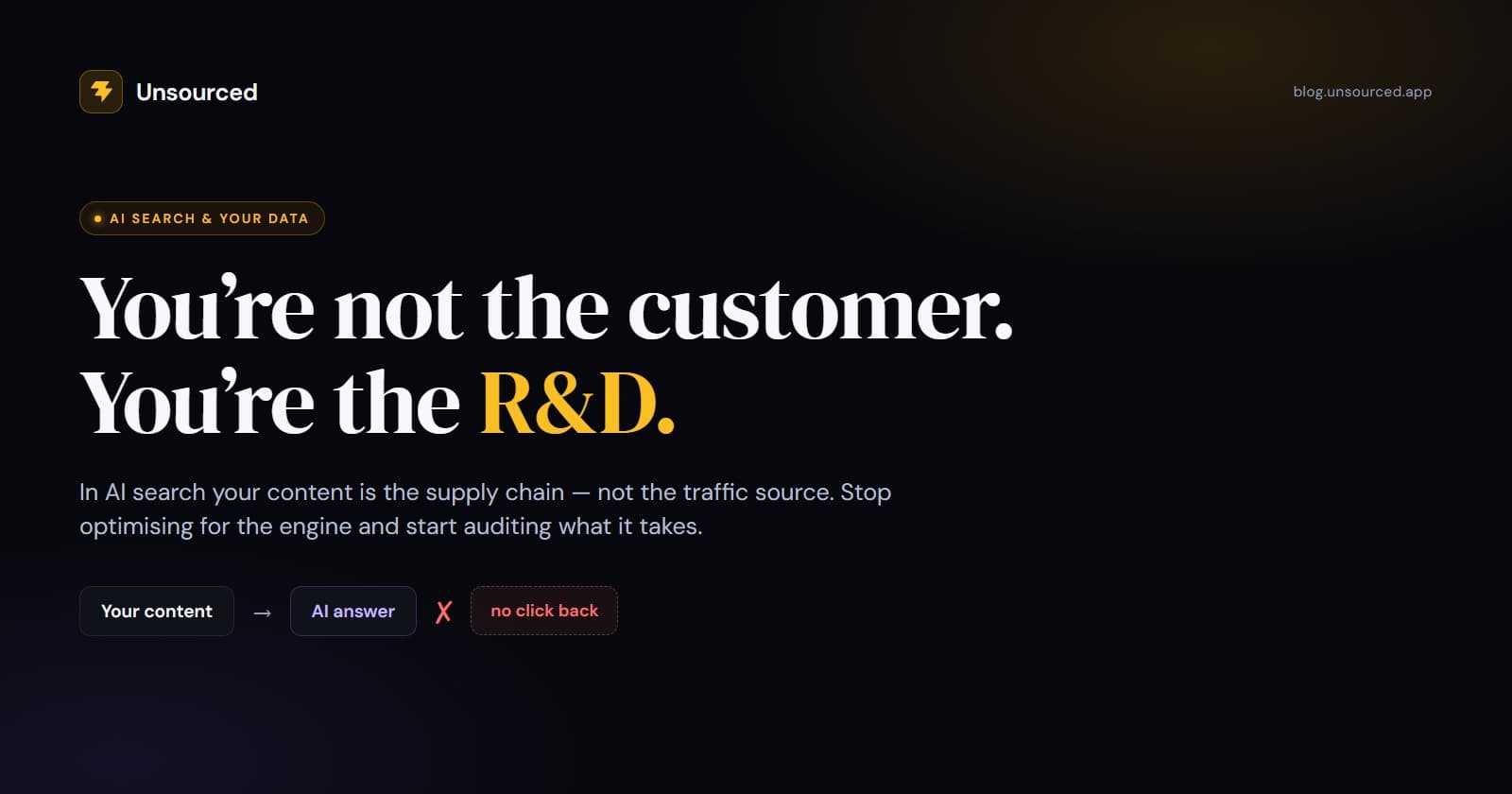
Your content is the supply chain now, not the traffic source. The fix isn't better SEO — it's auditing who extracts your data and what you get back
You've watched this happen. A feature sits behind a paywall for two years — picture-in-picture, "premium" this, "pro" that — and then one morning it's free for everyone. That wasn't a fit of corporate generosity. It was a lifecycle reaching its last step.
The platform locks a feature while it's expensive to run. It collects subscription revenue from the early adopters and, more valuably, it watches them: learning exactly how the feature gets used, trimming the backend until the cost per user falls toward zero. Once it's cheap enough to drive engagement instead of revenue, it gets "democratised" and handed out free. A fresh experimental feature takes its place behind the paywall, and the meter resets.
The early adopters didn't buy a premium feature. They paid a research tax to beta-test something until it was cheap enough to give away. They were the R&D, not the customer.
Hold that thought, because the same machine is now pointed at your website.
The rug-pull you're still optimising for
For twenty years the deal with search was legible. Make good content, rank, get clicks. Google sold ads against the demand your content created and sent traffic back in return. Lopsided, but a real exchange.
AI Overviews and answer engines have quietly cancelled the return leg. The engine reads your work, composes the answer on its own surface, and keeps the reader there. The demand your content created still gets monetised. The click that used to come back to you doesn't. Reports of traffic falling 30–50% in answer-heavy categories are no longer outliers — in its 2025 lawsuit Penske Media pinned more than a third of its affiliate-revenue loss on exactly this, and it isn't alone.
And the reflex across the industry is still the same three words: how do we optimise?
That's the move that keeps you in the flock. You optimise harder for the machine that has stopped paying you back, feeding it cleaner, more structured, more extractable content so it can answer around you more efficiently. You are paying the research tax on your own replacement.
Data access is the product
Here's the part the legacy playbook structurally cannot see, because it's built on Google Analytics — and Analytics only fires when a human browser loads a page.
The most valuable thing leaving your server right now isn't measured there at all. It's the ingestion: crawlers pulling your content to train and ground the models that will answer in your place. That traffic is invisible to Analytics and lives entirely in your server logs — the one file nobody in the SEO stack ever opens.
So you get a dashboard that says traffic is soft, and no dashboard at all for the thing actually happening: your content is the supply chain, and it's being drawn down with no meter on the pipe.
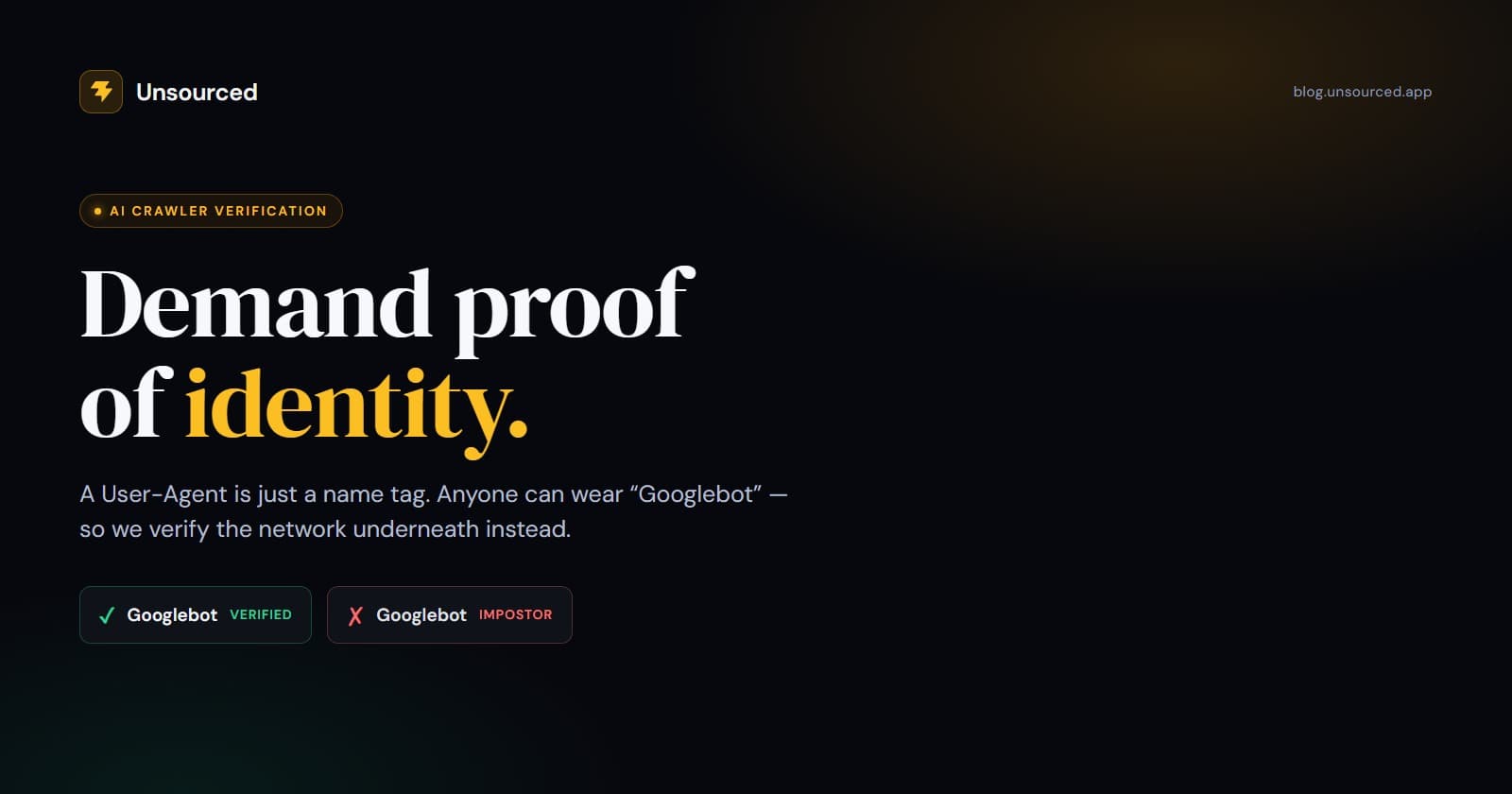
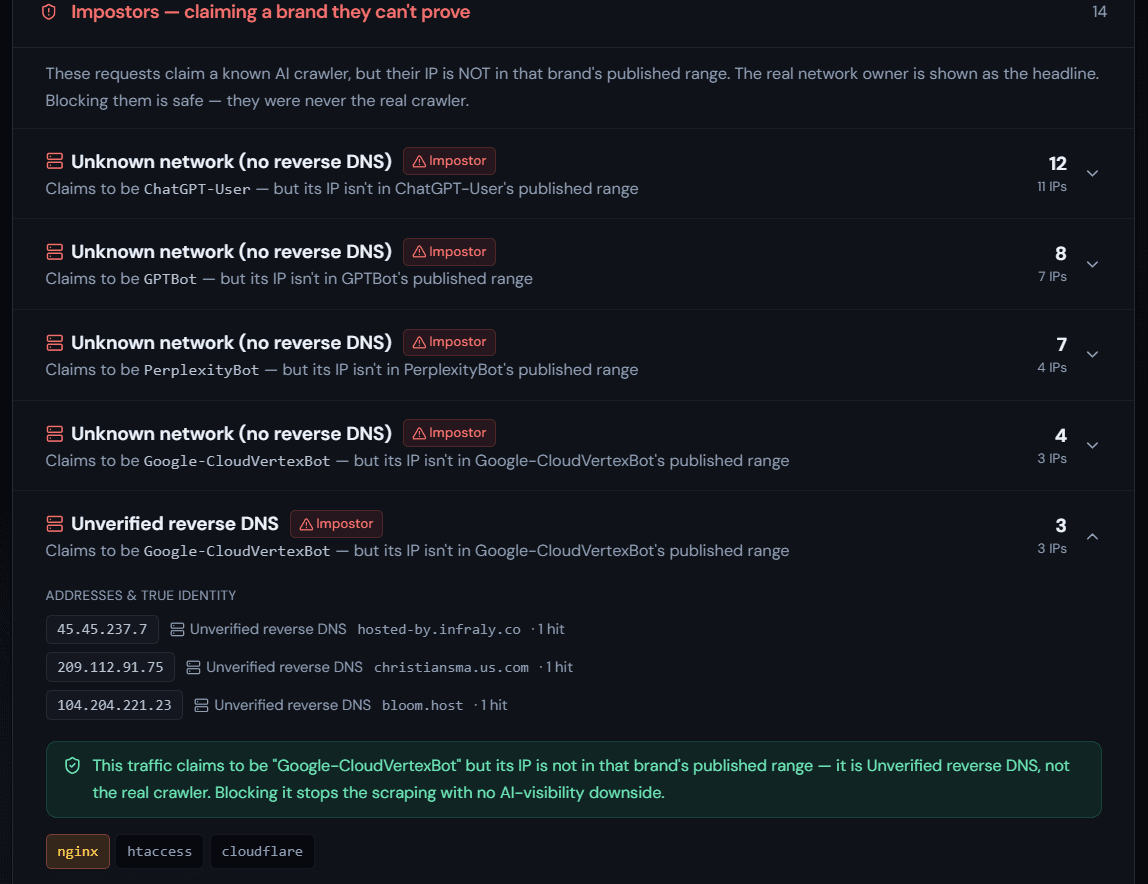
You can't negotiate an exchange you can't measure. You can't assert a right over data you can't prove was taken. You can't even tell whether the "Googlebot" in your logs is Google or a scraper wearing the name — which is its own quietly expensive problem.
Stop being a subscriber. Start being an auditor.
The shift is small and total. Stop asking "how do I rank inside the answer." Start asking "who is extracting my work, what are they doing with it, and what am I getting back?"
That's an evidence question, not an optimisation one — and it's the one Unsourced is built to answer:
Where you actually stand in AI search — which assistants cite you, which cite a competitor instead, shown with the verbatim quote as proof, not a made-up visibility score. (How AI search works →)
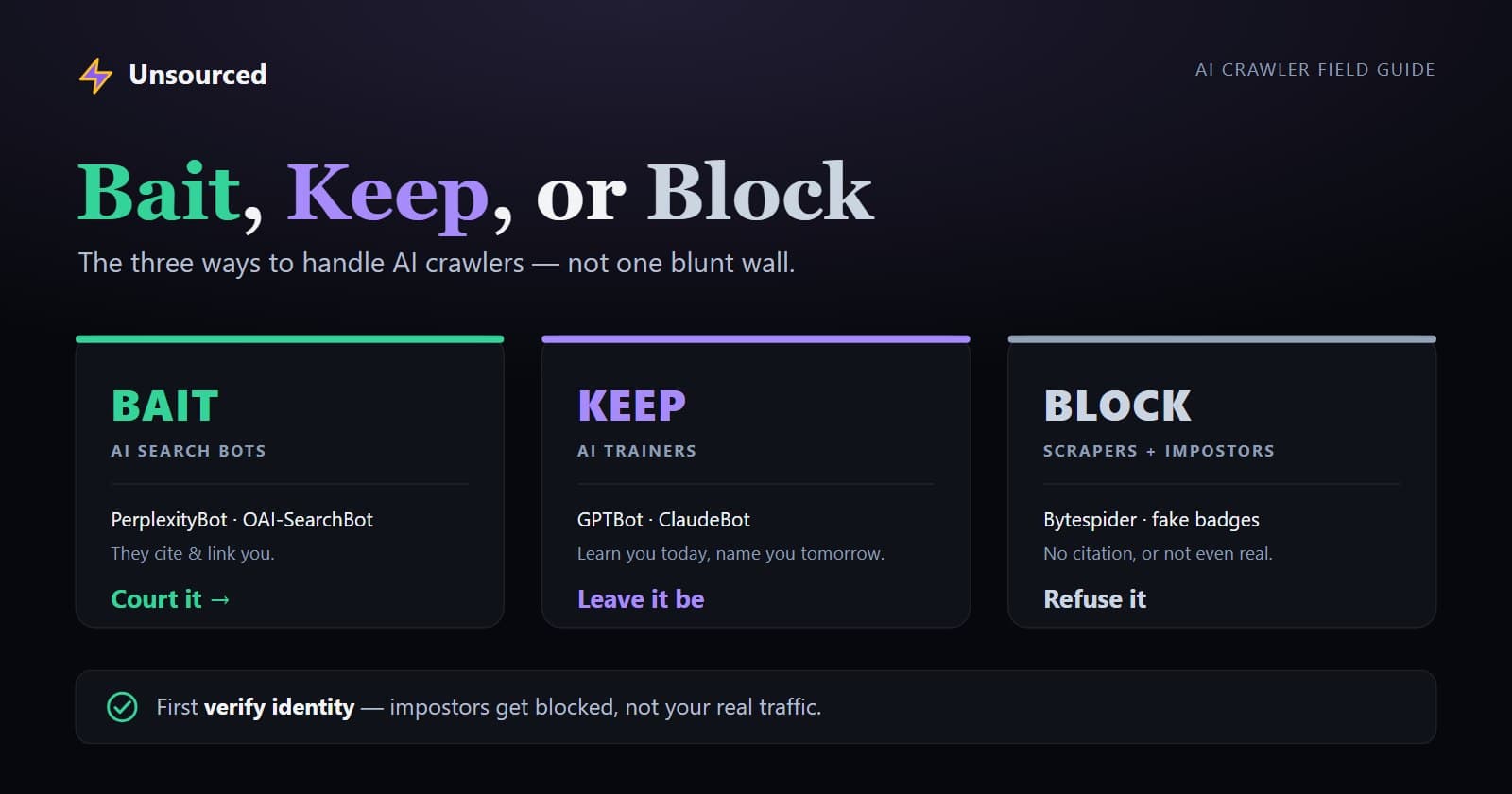
Who is really crawling you — every AI bot hitting your server, verified by identity rather than the name it claims, the impostors caught and counted. (The AI bot directory →)
Both sides of the ledger — what you hand the machine in crawls, against what it gives back in citations, side by side as evidence you could put in front of a lawyer.
You don't get a vote on AI Overviews; that shift is above yours and my pay grade. But you have complete control over who extracts data from your servers, and whether you can prove it. The first step out of the flock is the one nobody takes: open the logs.
— Rene Roach, Unsourced